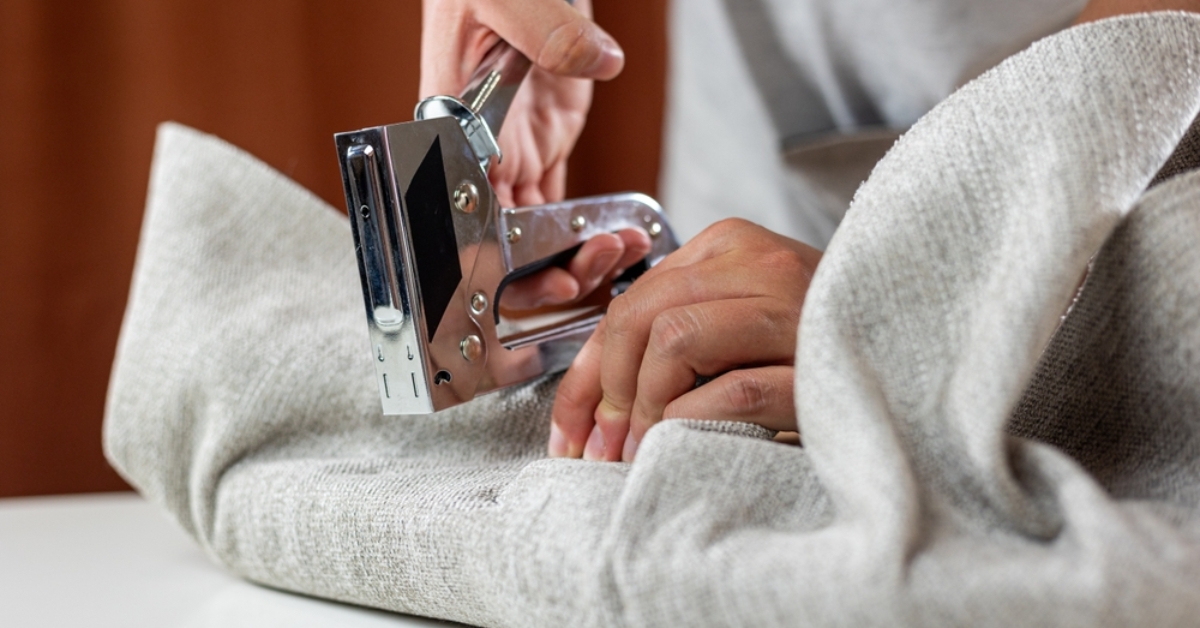
Best Upholstery Staple Gun Features You Should Look for Before Buying
Finding the right upholstery staple gun is the difference between a professional-looking chair and a DIY project that looks like a struggle. You must have something that can readily hammer the fasteners far into the hardwood frames without tearing up your costly material.
The best staple gun to use in upholstery must seem a kind of continuation of your hand. You must drill holes through layers of fabric and foam, into solid wood, without making a hole in the material. It is that balance point of power and ease of use that results in a professional finish. This is a guide that will make you discover the tool that is just right.
Why Does Your Choice of Stapler Matter?
We have all wrestled with the challenge of putting a staple into a bit of old oak with a cheap instrument. That staple will bend or stick out halfway. It also may snag your costly fabric. The best staple gun for upholstery will guarantee that your staples will always go in flush.
Which Key Features to consider before purchase?
Don’t just look at the price. Look for these specific features that make the actual work much smoother.
Is the Firing Power Adjustable?
Not all wood is the same. Fresh pine can be pinned quite easily, but the old mahogany is as tough as iron. A power adjustment knob is a lifesaver here. It lets you control how hard the gun hits. Otherwise, you risk blowing a hole right through silk fabric, or you miss a hardwood frame entirely.
How Does Ergonomics Affect Your Hands?
Upholstery is all about repetition. If you are doing a set of six dining chairs, you’ll be pulling that trigger hundreds of times. Look for a handle with a soft rubber grip. A “short-stroke” trigger is also a huge plus. It means you don’t have to open your hand as wide to squeeze, which prevents that “claw hand” feeling at the end of the day.
Is It Compatible with Fine-Wire Staples?
Standard staples from a hardware store are often too bulky. They look “clunky” on nice furniture. A dedicated staple gun for upholstery usually uses fine-wire staples. These are thin enough to hide in the weave of the fabric but have a wide top (the crown) to hold everything tight. It’s the secret to getting that “factory” look at home.
Does It Have a Long Nose Design?
Furniture isn’t flat. You’ll often need to staple inside a deep groove or around a curved armrest. A “long-nose” stapler has an extended tip that can reach into these tight spots. It’s like the difference between trying to paint with a massive roller versus a detail brush—the long nose gives you much better aim.
Understanding Different Power Sources
Just consider how much work you intend to do before deciding on the power source to use.
Manual Staplers: Great for Quick Fixes
Manual guns are cheap and easy to store. They don’t need cords or batteries. However, they rely on your muscles. If you have any arthritis or just a very large project, these can be exhausting. They are best for small tasks, like fixing a single cushion.
Electric and Cordless Models: The Middle Ground
Electric staplers will lift the heavy lifting on your behalf. You only have to give a light hitch, and the motor shoots out the staple. The battery-powered ones are wonderful as you can move almost around a sofa and not stumble over a cord. They are perfect for most DIYers.
Pneumatic Staplers: The Professional Choice
When you encounter a pro upholsterer, he is most likely operating an air-powered (pneumatic) gun. They are insanely light and fire as fast as you can pull the trigger. They require an air compressor to operate, but when you have more than one or two projects a year, the speed and power are worth the investment.
Durability and Maintenance Features in Upholstery Staple Gun
You desire a machine that is to remain in your workshop for many years, not one that breaks after one chair.
- All-Steel Parts: Avoid guns that use too much plastic on the inside. Steel internals handle the shock of firing much better.
- Bottom-Loading Magazine: These are much easier to refill. Also, if a staple jams, a bottom-loader usually lets you clear it out in seconds.
- Staple View Window: This is a little peek-a-boo opening. It allows you to see whether you are running low. You avoid firing blanks constantly, which can leave marks on your wood.
Practical How-Tos of Testing a New Tool
Pick the tool in your hand before you purchase. It must not be heavy at the front. If you want to dive deeper into setting up a professional-feeling workflow, Valley Drapery & Upholstery has great information on keeping your workflow organized and efficient.
Always check how easy it is to squeeze the handle. When it is a battle in the store, it will be a nightmare when you are halfway through a project.
Conclusion
The right upholstery staple gun is all the difference between the way your furniture appears and how your body feels the next day. You can do this by seeking adjustable power, a good grip, and a lengthy nose to reach tight spaces. You can take your time and enjoy the process of restoring a piece of furniture.
FAQs
- Why is my staple gun only going halfway in?
This is usually a power issue. When you are using a manual gun, just use two hands to do it, squeeze with one hand and press down with the other on the head of the gun. Check the pressure settings on electric or pneumatic guns.
- Do I need to oil my staple gun?
Yes, if it’s pneumatic. One drop of oil in the air hole before you start work keeps the internal parts sliding smoothly and prevents jams.
- Are battery-powered staplers heavy?
They can be. The battery will add a bit of weight. However, most individuals believe the trade-off of not using a cord is worth it. An electric gun with a cord could weigh less if you have weak wrists.